CLIENT STORY
The business moved from scattered information and founder-dependent processes to a structured operational system where everything has a clear place and purpose.
Problems
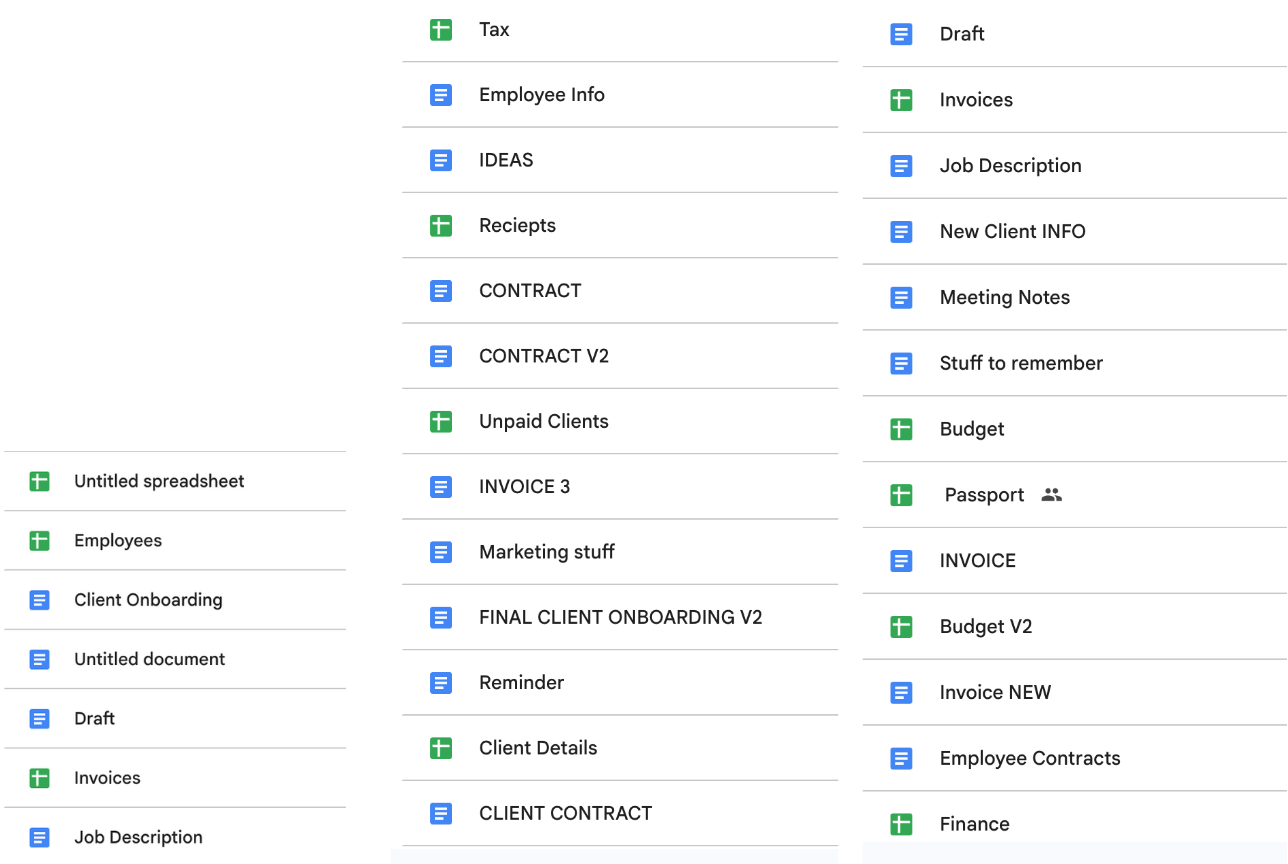
Random Google Drive folders
Documents with inconsistent names
Client information scattered
No SOP library
No central client tracker
Repetitive manual tasks
Founder responsible for everything
Solution
The new structure makes it easier to:
Find important information quickly
Manage clients consistently
Onboard new clients without starting from scratch
Delegate tasks and responsibilities
Follow documented processes
Track recurring tasks and deadlines
Keep business and financial documents organised
Reduce unnecessary manual work
Maintain consistency as the team grows
The Audit
-
File Management
Client Management
Employee Management
Finance Management
Task Management
Operations
-
Business files were scattered across multiple folders with inconsistent naming and duplicate documents.
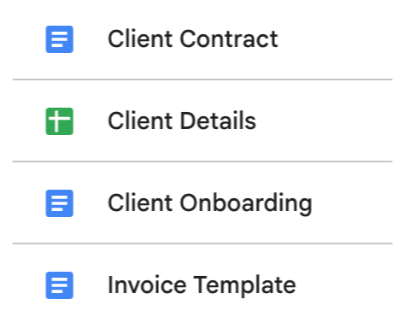
Client information, notes and project details were stored across separate documents.
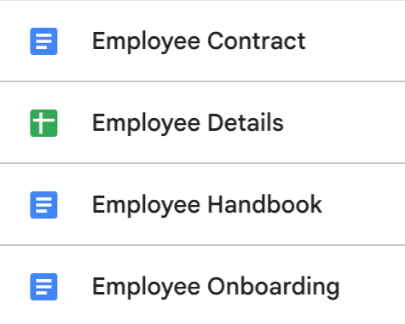
Employee information, notes and project details were stored across separate documents.
Invoices, expenses and payment information were combined in inconsistent spreadsheets.
Tasks, reminders and ideas were mixed together in one general to-do list.
Key processes existed as informal notes or inside the founder’s head rather than documented procedures.
-
Time wasted searching for information and increased risk of using outdated files.
Difficult to get a complete view of each client and increased the chance of information being missed.
Employees relied on the founder for answers and day-to-day direction.
Difficult to track financial activity and outstanding actions efficiently.
Poor visibility over priorities and increased risk of missed deadlines.
The business was heavily dependent on the founder and difficult to delegate.
The Transformation
-
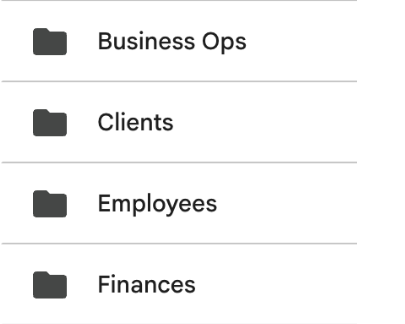
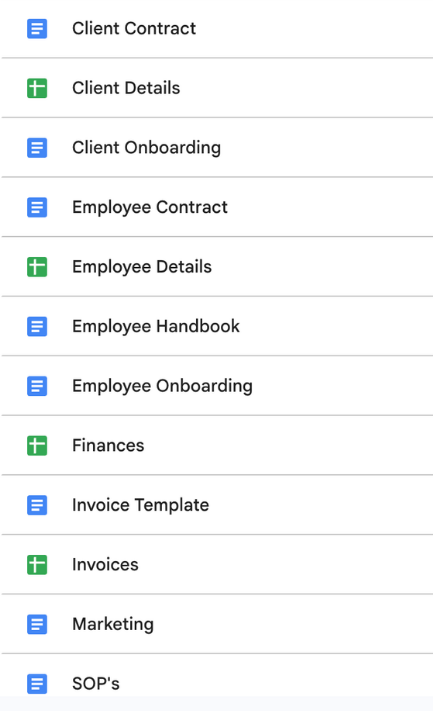
Created a standardised folder structure with clear categories, naming conventions and dedicated locations for business, client, financial and operational documents.
-
Created a consistent client structure so key information, documents, communication and project materials could be accessed from one organised location.
-
Rebuilt the client and employee onboarding process into a clear, repeatable workflow with defined steps, required information and supporting templates.
-
Turned informal notes and founder knowledge into clear SOPs and step-by-step processes that can be followed consistently.
-
Separated tasks, recurring responsibilities and ideas into a structured system with clear priorities and ownership.
-
Separated invoices, expenses, financial records and administrative documents into a clear structure that makes information easier to track and maintain.
-
Organised roles, responsibilities, internal resources and team information so employees can access what they need without constantly relying on the founder.